
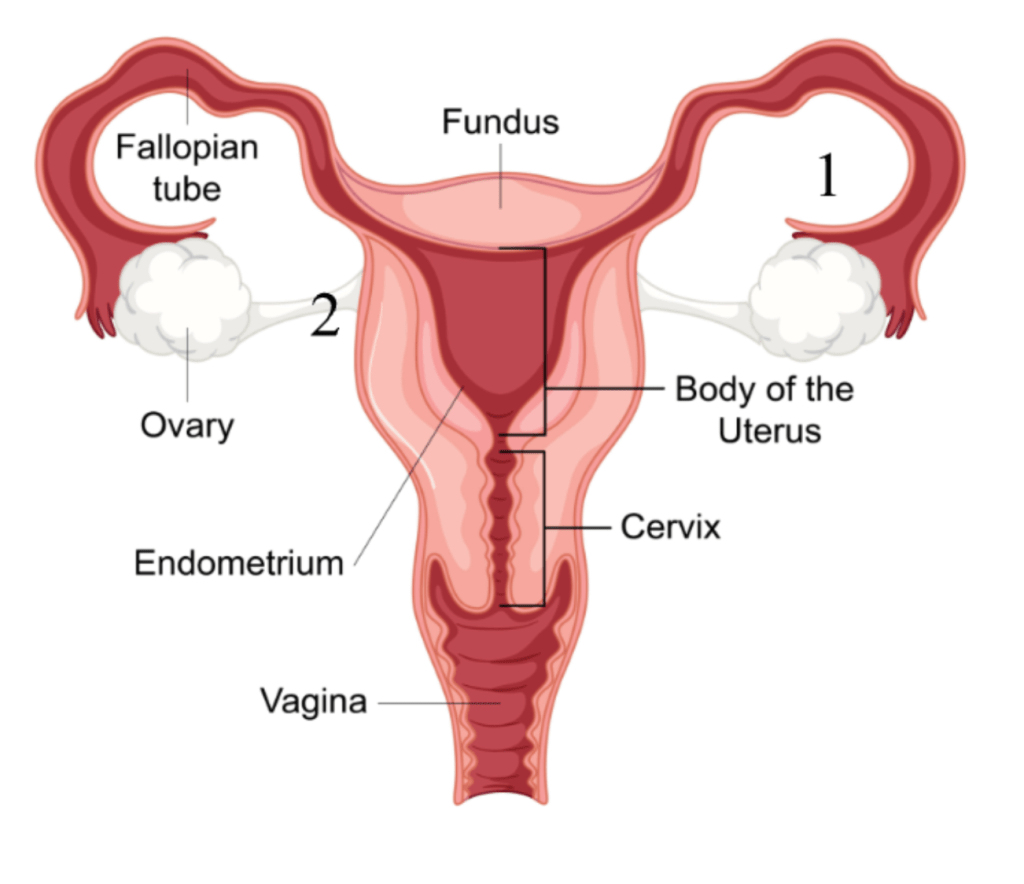
A period, or menstruation, is a naturally occurring process. The menstrual cycle is when the body prepares for a possible pregnancy. A period, which is the shedding of the uterine lining (endometrium), occurs if a person isn’t pregnant. This usually happens every month, starting during puberty (10-16) and continuing till menopause (45-55). If pregnancy doesn’t occur, the unused uterine lining is no longer needed, so it is removed through menstruation.
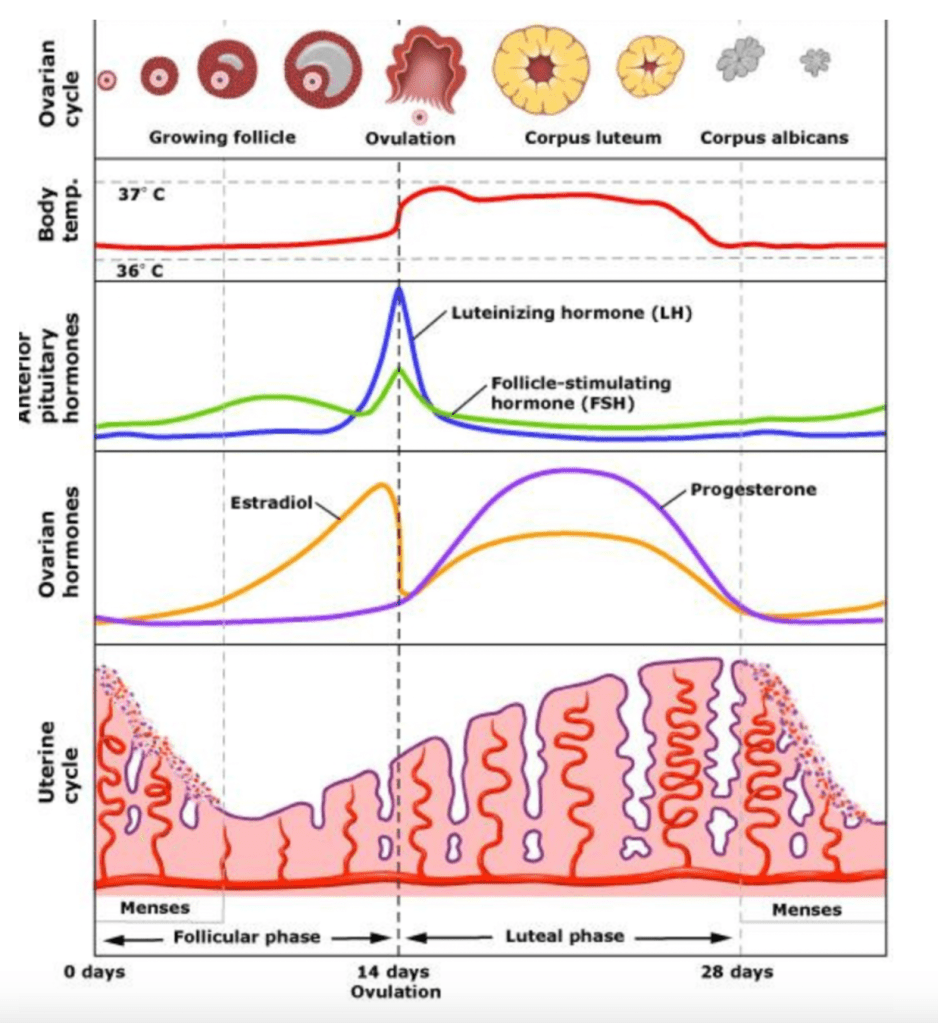
One hormone in the human body during adolescence that has a positive feedback loop is luteinizing hormone (LH). LH is a hormone produced by the pituitary gland that stimulates the production of testosterone in males and progesterone in females. During the menstrual cycle in females, rising levels of estrogen can trigger a surge in LH production, which in turn stimulates the release of an egg from the ovary. This creates a positive feedback loop, where the initial increase in estrogen levels leads to a further increase in LH production, which results in a peak in estrogen levels and ovulation.
The menstrual cycle lasts about 28 days, though it can vary from 21 to 35 days and is controlled by hormones.
Menstruation Cycle
Day 1-5 → Menses (Bleeding)
- Least amount of estrogen & progesterone
- The shedding of uterus lining (endometrium), taking out of the egg, blood vessels come out.
- Levels of estrogen and progesterone are low. Levels of estrogen and progesterone are low.
- Hormones: Levels of FS and LH will be low. They fluctuate and that’s why we get mood swings.
Day 5-14 → Follicular phase (Eggs mature)
- As eggs mature → More estrogen & FSH
- Maturation of follicle takes places (Egg is maturing in this stage)
- Follicle → Fluid filled sac that nurtures the egg within the ovary.
- Dominant follicle → One egg that is matured each cycle
- Fsh & LH regulate development of egg in follicle
- The phase in which your egg matures, a mature egg, is called ovum. Hormones are rising.
- Pituitary sends follicle stimulating hormones to your ovaries to mature the eggs. These hormones (FSH) enter the ovaries, the rise of FSH will lead to the maturation of Follicle(the egg is inside the follicle). As the follicle matures the level of estrogen will increase and help in the maturation of the dominant follicle(amplifier of follicle).
Day 14 → Ovulation phase
- Moment egg is matured, ovum is fully natured (Can be released)
- There is dramatic increase in LH → Luteinizing hormone
- Cause follicle rupture and release ovum → Ovulation phase (14th day)
- During ovulation estrogen is also found in high concentration in the women’s blood
- Rupture of the mature follicle to release ovum into the fallopian tube.
- Once the egg matures the release of luteinising hormone from the pituitary will mark the dominant follicle to rupture and release the mature egg into the fallopian tubes. This mature egg is called an ovum. The mature ovum has a viability of approx 72 hours for the process of fertilization. At this stage the levels of estrogen, LH, FSH.
Day 15-20 → Luteal phase
- Marks as a phase for uterine thickening, where the lining of the uterus – endometrium, thickens and maintains itself from the 14th-28th day. Lining is maintained by the surge of progesterone hormones. There is a drop of LH & FSH hormone.
- The dominant follicle, that released the eff, will turn into a yellow fluid filled cell called as corpus luteum which will in turn secrete estrogen.
- If the egg is not fertilized, women will enter into the next cycle, beginning without menses which is the shedding of the uterus lining, unfertilized egg goes along with the blood.
- Once the egg has been releases the uterus lining gets thickened and maintains itself up to the 28th day to prepare the body for the implantation of Zygote.This maintenance of lining is done by progesterone hormone released from the ovaries.The remnants of the dominant follicle(matured one) will be converted into a yellow fluid filled cell called as Corpus Luteum; This releases more estrogen.
- Then the cycle repeats and you go right back to menses.
Menstrual Disorders
Dysmenorrhea → Painful cramps
- Aren’t able to perform you’re daily tasks
- Uterus contractions are severe
- Primary Dysmenorrhea
- Really heavy cramps and heavy bleeding
- Secondary Dysmenorrhea
- Fibroids – Bunch of cysts on your uterus. Endometriosis – Thickening of uterine walls in other areas too, not only walls, could be outside on the fallopian tube and ovary.
Menorrhagia → Heavy bleeding
- Could be due to bad menstrual hygiene, genetic, low iron diet of iron – the body is not able to retain RBS’s, a lot of RBCs are being used. Low iron → more bleeding → low iron.
- Another cause is your lifestyle.
To conclude, the menstrual cycle is a biological process driven by hormonal changes that prepare the body for pregnancy. Each phase is critical for hormonal balance and reproductive health. Periods are natural and a healthy sign of the body’s functioning; it’s not just bleeding.
 LifeLine
Leave a comment