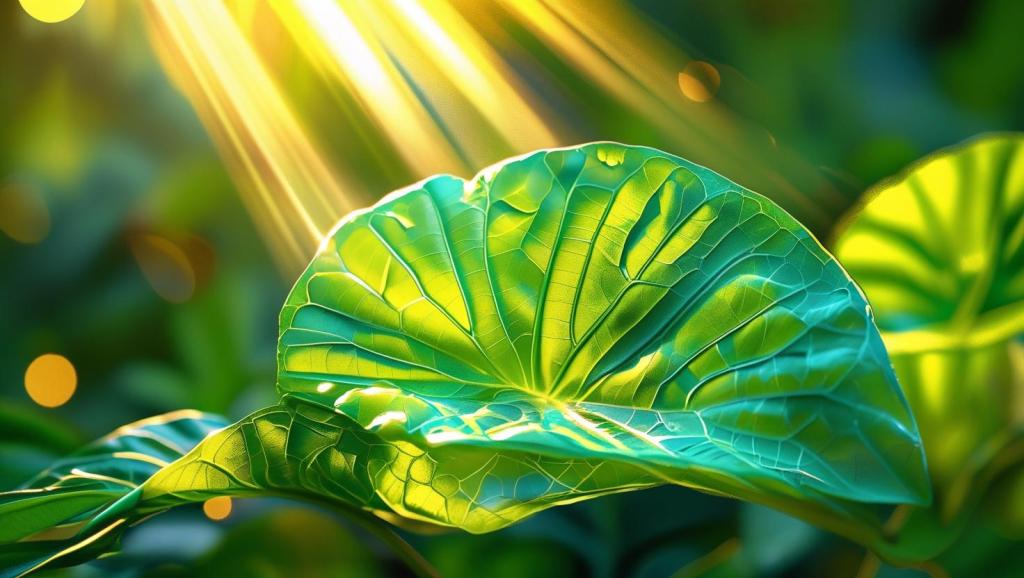
Imagine if your body could absorb sunlight and convert it into daily meals. That’s exactly what plants do every single day through a biochemical process called photosynthesis. Photosynthesis is how plants turn light energy into chemical energy stored in glucose.
The process of photosynthesis is:
6CO2 + 6H2O (+ sunlight through chlorophyll) = C6H12O6 + 6O2
Carbon dioxide + water (+ sunlight) = glucose + oxygen
Photosynthesis is an endothermic reaction and mainly takes place in the chloroplasts of plant cells. They are loaded with a pigment called chlorophyll, which captures sunlight. Photosynthesis requires energy in the form of light to drive the chemical reaction. Chlorophyll is what absorbs the light energy.
The carbon dioxide required for photosynthesis comes from the air. It enters the leaves through the stomata. Water enters the plant through the roots, and is transported to the leaves in the xylem.
Further, the glucose produced by photosynthesis is used by the plant as a source of energy (main product), while the oxygen is released into the atmosphere for other living organisms to breathe (byproduct).
The process of photosynthesis is breaken down in 2 stages: light dependent reaction, and light independent reaction.
Light dependent reaction
In the light-dependent reactions, energy from sunlight is absorbed by chlorophyll and converted into stored chemical energy, in the form of the electron carrier molecule NADPH and the energy currency molecule ATP.
Light independent reaction (Calvin Cycle)
In the light independent reactions, the chemical energy (ATP, NADPH) harvested during the light dependent reactions drives the assembly of sugar molecules from carbon dioxide. Therefore, although light- independent reactions do not use light as a reactant, they require the product of light dependent reaction to function.
In simple terms, light-dependent reactions capture energy from sunlight and convert it into chemical energy (ATP and NADPH), while light-independent reactions use this stored energy to produce glucose from carbon dioxide. Together, these processes are crucial for the overall process of photosynthesis in plants.

Factors affecting the rate of Photosynthesis
- Light intensity: Sunlight
Without enough light, a plant cannot photosynthesise very quickly – even if there is plenty of water and carbon dioxide and a suitable temperature. Increasing the light intensity increases the rate of photosynthesis, until some other factor – a limiting factor – becomes in short supply. At very high light intensities, photosynthesis is slowed and then inhibited, but these light intensities do not occur in nature.
- Carbon Dioxide Concentration
Carbon dioxide is one of the reactants in photosynthesis. If the concentration of carbon dioxide is increased, the rate of photosynthesis will therefore increase. At some point, another factor may become limiting and this is shown by the plateau (flattened section) of the graph.
- Temperature
The chemical reactions that combine carbon dioxide and water to produce glucose are controlled by enzymes. As with any other enzyme-controlled reaction, the rate of photosynthesis is affected by temperature. At low temperatures, the rate of photosynthesis is limited by the number of molecular collisions between enzymes and substrates. At high temperatures, enzymes are denatured.
- Chlorophyll
Chlorophyll absorbs the light energy required to convert carbon dioxide and water into glucose. Chlorophyll is green – so absorbs the red and blue parts of the electromagnetic spectrum and reflects the green part of the spectrum. Leaves with more chlorophyll are better able to absorb the light required for photosynthesis.
Photosynthesis is the engine of life on Earth. That little leaf is a miniature solar panel, quietly powering the planet.
 LifeLine
Leave a comment