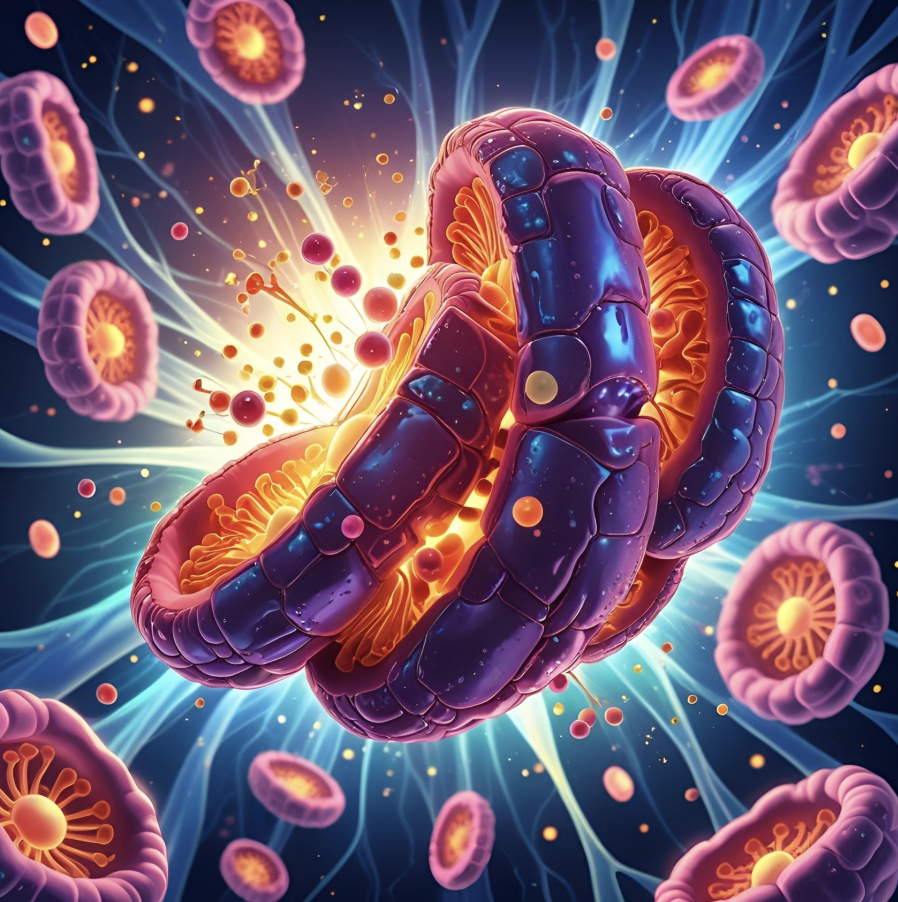
Cellular respiration is a metabolic process your cells use to break down glucose and release chemical energy, in the form of ATP, for functioning. Cells convert the food we eat/nutrients to produce energy. It occurs in almost every living cell. In eukaryotic cells, it takes place in the mitochondria (the powerhouse of the cell!) and in prokaryotes in occurs in the cytoplasm.
Aerobic Respiration
The process is as follows:
C6H12O6 + 6O2 = 6CO2 + 6H2O + ATP
Glucose + Oxygen = Carbon Dioxide + Water + Energy
Aerobic respiration is divided into 4 stages: glycolysis, link reaction, kreb cycle, and finally electron transport chain.
Glycolysis
- Occurs in cytoplasm
- Universal step in all living organisms
- No oxygen required
- Breaks down glucose into 2 pyruvate molecules
- Final results: 2 ATP, 2 NADH and 2 pyruvates
Link Reaction (intermediate step):
- Pyruvate is transported to the mitochondrial matrix.
- 2 pyruvates are oxidized and converted to 2 Acetyl Coenzyme A.
- 2 Carbon Dioxide is released
- 2 NADH are produced
Krebs Cycle
- The Krebs cycle consumes pyruvate and produces three things: CO2, ATP, and NADH and FADH (electron carriers)
- Pyruvate is broken down completely
Electron Transport Chain
- Occurs in Inner mitochondrial membrane
- NADH and FADH give up electrons to the chain
- Energy is captured and released as electrons move from high energy to low energy, using a set of proteins (ATP synthase) embedded in the membrane of mitochondria.
- Oxygen is terminal acceptor
- Final results of ETC – 32-34 ATPs
- Water is released as a byproduct
ATP Synthase
- Adds a phosphate to ADP to turn into ATP
- Protons travel down the electrochemical gradient to the ATP synthase, powering it.
Anaerobic Respiration
Without oxygen, aerobic respiration switches to fermentation or anaerobic respiration. There are two types of fermentation: alcoholic fermentation and lactic acid fermentation. Both start with glycolysis in which two molecules of ATP are produced from one molecule of glucose.
Anaerobic respiration produces far less ATP than does aerobic cellular respiration, but it has the advantage of being much faster. For example, it allows muscles to get the energy they need for short bursts of intense activity. When the body cannot supply the cells with the oxygen needed to break down glucose, it has to carry out anaerobic respiration.
Alcohol Fermentation
Alcoholic fermentation is carried out by single-celled organisms, including yeasts and some bacteria. We use alcoholic fermentation in these organisms to make biofuels, bread, and wine.
Equation:
C6H12O6 → 2 ATP + 2 C2H5OH + 2 CO2
Glucose → ATP + Ethanol + Carbon Dioxide
Lactic Acid Fermentation
Lactic acid fermentation is undertaken by certain bacteria, including the bacteria in yogurts, and also by our muscle cells when they are worked hard and fast.
- Starts with glycolysis
- Occurs in animals muscle cells and some one-celled organisms
- Produces 2 ATP & lactic acid
- Produces soreness when built up in muscles
- Production in yogurt, cheese and other milk products
Equation:
C6H12O6 → 2 ATP + 2 C3H6O3
Glucose → ATP + Lactic Acid
When anaerobic respiration takes place, the lactic acid produced soaks the muscle cells and prevents muscle from doing their job. This causes fatigue and sometimes cramps. After activity that has led to anaerobic respiration, the person involves pants and breath heavily. This happens because they need lots of oxygen to get rid of the lactic acid that has built up in their body.
Differences Between Aerobic & Anaerobic
| Aerobic | Anaerobic |
| Needs Oxygen | No oxygen needed |
| 30-38 ATP molecules | 2 ATP molecules |
| Products – CO2, H2O, ATP | Products – ATP, Ethanol or lactic acid |
| Reactants – C6H12O6 + O2 | Reactants – C6H12O6 + Electron acceptor |
| Cytoplasm and mitochondria | Cytoplasm |
| Glycolysis, Link Reaction, Krebs cycle, ETC | Glycolysis, Fermentation |
 LifeLine
Leave a comment