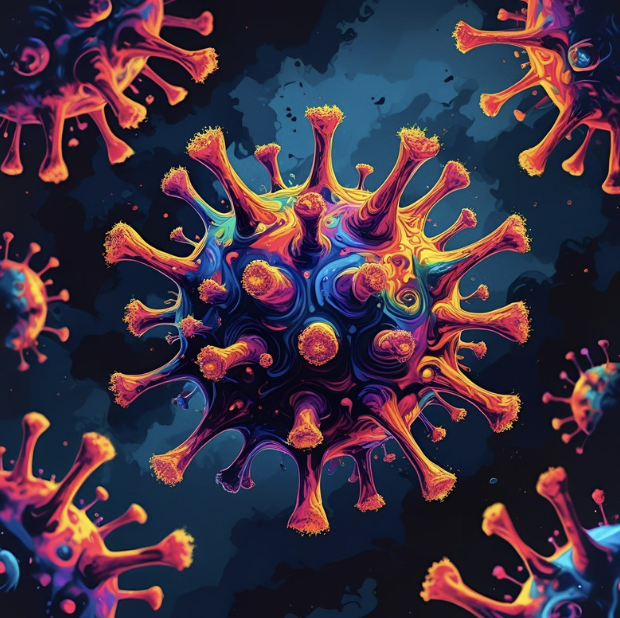
When we think of viruses, many of us are instantly transported to memories of masks, lockdowns, and the global pandemic. But viruses have been around long before COVID-19 and they’ll be here long after. Viruses cannot be specified as either a prokaryote or eukaryote as they are not living cells.
Unlike bacteria, viruses can’t reproduce or carry out metabolic processes on their own. They have some form of DNA or RNA and have a form of protein coat called a capsid to protect the genetic material. Some viruses package special enzymes.
Viruses are non-cellular that can only replicate inside the host cell. It’s an infectious entity that is made out of genetic material and protein that can invade and reproduce only within living cells. They can’t carry out any of the life processes on their own.
Viruses infect your healthy cells. The virus makes copies of it and multiples it throughout your body. It mostly has spiky surface proteins which it uses to latch on the receptor on healthy cells. Viruses impact your immunity and healthy cells. They cannot replicate without a host which is what leads to problems for the host cell. Anything that is alive can be a host as cells have the machinery that is needed.
Viruses are obligate parasites that require metabolic capabilities of a host to replicate their DNA/RNA and to produce infectious viral particles that can restore and maintain their life cycle. They lack metabolic energy of their own so they depend on host cells to generate energy or synthesize proteins and other vital functions.
There are two cycles of how viruses reproduce. Let’s understand them:
Lytic Cycle
- Attaches to the host cell
- Injects the genetic material into the cell
- Some viruses can be taken inside the cell
- In most cases cells do not know about this (They can be tricked into thinking that it is a food particle)
- It starts following the virus’s instructions, leading it to make copies of the virus.
- This can cause the cell membrane of the host to rupture leading to the virus spreading between cells.
Lysogenic Cycle
- Attaches to the host cell
- Injects the genetic material into the cell
- The material stays hidden and emerges with the host cell’s genetic material
- Then daughter cells are formed and this reproduces.
- This can then be triggered into going into the lytic cycle leading all of these cells to start assembling viruses
- Triggers going into the lytic cycle varies, e.g.; chemicals or lack of food
One of the most challenging things about viruses is how quickly they mutate. RNA viruses, like the flu or coronavirus, change constantly, which is why flu vaccines need updating yearly and why COVID-19 variants kept emerging.
Viruses may be microscopic, but their impact is colossal. In a world where the next viral outbreak could emerge overnight, understanding these tiny invaders is not just fascinating but essential. As we continue to unlock the secrets of viruses, we’re forging the future of immunology and global health.
 LifeLine
Leave a comment