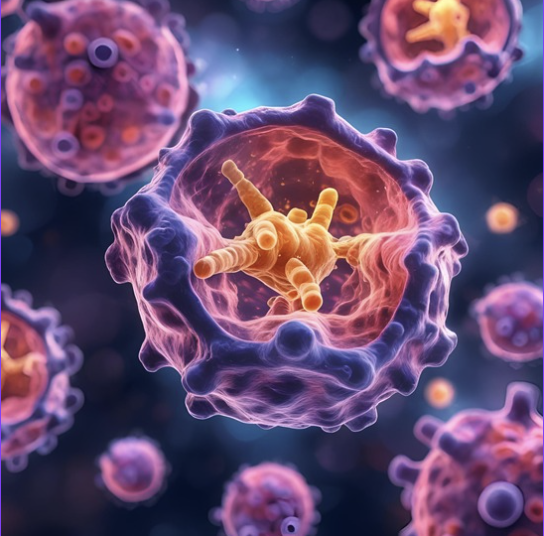
Every living organism on is made up of cells. They’re the building blocks of life. They are designed intricately to carry out all the essential processes needed for life. But what lies inside them? Let’s take a closer look.
The contents of the cell, or the structures of the cell, allow the cell to be “specialized.” Together with the cell’s proteins, they allow the cell to do specific things. They allow a cell to act like a neuron or a bone cell or a skin cell. The structure-function relationship describes a pattern evident throughout biological systems. Cells vary in shape. The variation in shape mainly depends on their function.
Prokaryotic and eukaryotic cell
There are two types of cells, prokaryotic and eukaryotic. Prokaryotic cells, bacteria, are simple and lack membrane-bound organelles. Eukaryotic cells, found in animals, plants, and fungi, are more complex and contain membrane-bound organelles, including a nucleus.
| Eukaryotes | Prokaryotes | |
| Type of Cell | Unicellular and multicellular | Always unicellular |
| Cell size | Size ranges from 10 μm – 100 μm in diameter | Ranges in size from 0.1 μm – 0.5 μm in diameter |
| Cell wall | When present, chemically simple in nature | Usually present; chemically complex in nature |
| Cell membrane | Present | Present |
| Nucleus | Present | Absent. Instead, they have a nucleoid region in the cell |
| Ribosomes | Present. Comparatively larger in size and linear in shape | Present. Smaller in size and spherical in shape |
| DNA arrangement | Present | Present |
| Mitochondria | Present | Absent |
| Cytoplasm | Present, cell organelles present | Present, but cell organelles absent |
| Endoplasmic reticulum | Present | Absent |
| Plasmids | Very rarely found in eukaryotes | Present |
| Cytoskeleton | Present | Mainly absent |
| Microtubules | Present | Absent – Rare |
| No. of chromosomes | More than one | One – plasmid |
| Lysosome & Centrosome | Present | Absent |
| Vesicles and vacuoles | Present | Present |
| Cell division | Through mitosis | Through binary fission |
| Flagella | The flagella are larger in size | The flagella are smaller in size |
| Reproduction | Both asexual and sexual | Asexual |
| Example | Plant and Animal cell | Bacteria and Archaea |
Organelles and cell function
Cell Membrane: A phospholipid layer, forms cell boundary, is partially permeable, acts as a barrier and controls movement in and out of cell
Cell Wall: Semi-rigid structure, made of cellulose, supports cell and prevents cell from bursting
Centrosome: Organizing the microtubule, cell division, structure
Chromatin: Tangles spread out form of DNA found inside the nucleus
Ctyoskeleton: Muscle and skeleton, made of 3 types of protein
Cytoplasm: Jelly fluid, holds cell organelles together, site of major chemical reactions, site for the metabolic activity of the organelles
Endoplasmic Reticulum (ER): Many chemical reactions, system of folded membranes, 2 types – Rough ER synthesizes protein, Smooth ER synthesizes lipid
Golgi apparatus: Helps make package material (protein) to be transported – post office of the cell
Lysosome: Contains digestive enzymes are durable collectors and waste removers for the cell
Mitochondria: Powerhouse, site of respiration, break down sugar to make ATP
Nuelceolus: A structure where ribosomes are made
Nucleus: Membrane bound organelle, contains DNA material, carries information inherited through generation, has role in processes like growth and metabolism
Peroxisome: Involved in the metabolism of lipids and catabolism of long-chain fatty acids
Ribosomes: Form protein, made of RNA and protein
Vacuole: Large fluid sack, support cell, make cell turgid (swollen), if vacuole shrinks cells become smaller due to flaccidity (limp). Provides shape and help in storage of substances.
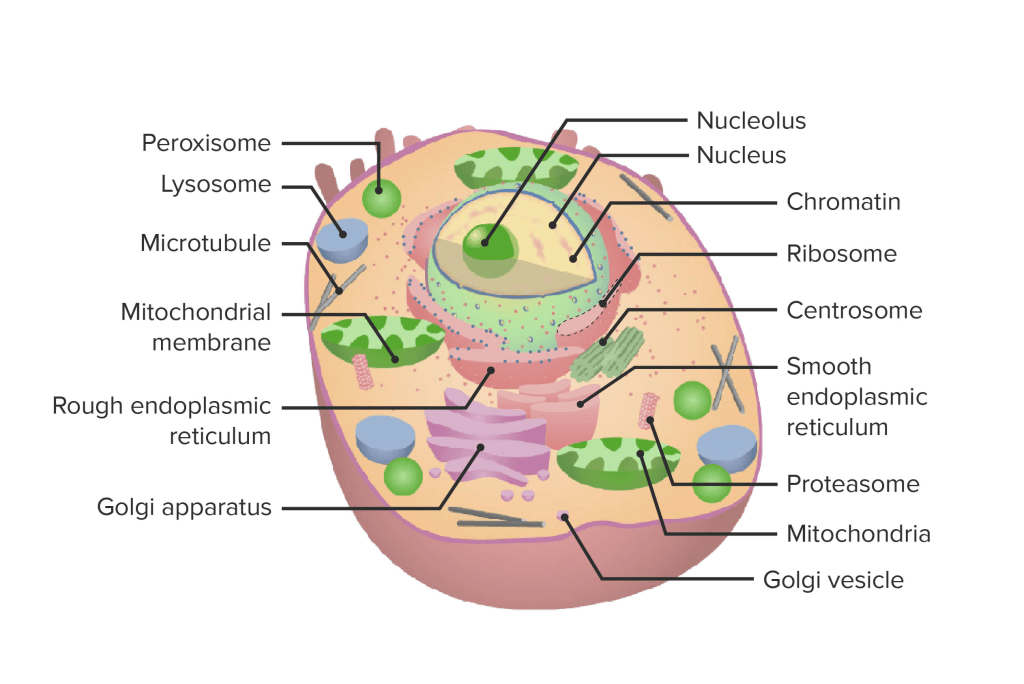
The structure of a cell is like a miniature city. As science advances, our understanding of deepens, reminding us of complexity in the building blocks of life.
 LifeLine
Leave a comment