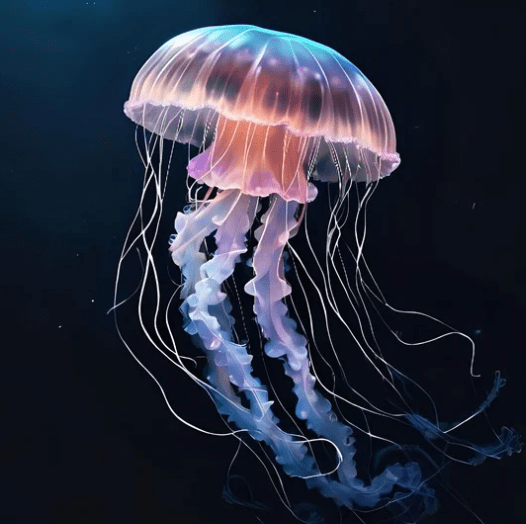
Reproduction is a biological process by which an organism reproduces an offspring that is biologically similar to the organism. It is how living organisms pass on genetic material. Reproduction enables and ensures the continuity of species, generation after generation. It is the main feature of life on Earth. Without it, life wouldn’t exist. There are two main types of reproduction: asexual and sexual.
Asexual Reproduction
“Asexual reproduction refers to the type of reproduction in which only a single organism gives rise to a new individual.”
- A single parent/gamete
- Without involving two different gamete cells
- Asexual reproduction is genetically identical (Biology Term – Cloning)
Asexual reproduction does not involve the fusion of gametes, and therefore, the offspring produced are genetically identical to the parent. The organisms produced by asexual reproduction are less diverse in nature. This type of reproduction is practiced widely by unicellular organisms.
The process involves rapid population growth and no mate is required for the process. However, a lack of genetic diversity makes organisms more susceptible to diseases and nutrition deficiencies.
Asexual reproduction is further divided into:
- Binary Fission: In this, the cell splits into two each cell carrying a copy of the DNA from the parent cell. For eg., amoeba.
- Budding: In this, a small bud-like outgrowth gives rise to a new individual. The outgrowth remains attached to the organism until it is fully grown. It detaches itself and lives as an individual organism. For eg., hydra
- Fragmentation: In this, the parent organism splits into several parts and each part grows into a new individual. For eg., Planaria
- Sporogenesis: In this type of reproduction, a new organism grows from the spores. These can be created without fertilization and can spread through wind and animals.
| Advantages Of Asexual Reproduction | Disadvantages Of Asexual Reproduction |
| The process requires less energy. | Since the offspring is an exact copy of the parent, any negative mutation will also pass on to the offspring. |
| It takes place in various environments. | There is limited diversity within life forms. |
| It allows for the survival of species. | It is difficult to control the increasing population. |
| A single organism can develop a colony. | The organisms produced cannot adapt to the changing environments. |
| All the positive traits of the species are transferred to future generations. | There is a huge competition for food and space among the species. |
| Rapid growth in short amount of time | They have short lifespans. |
| It requires much less resources and time. | No genetic variation Climate and atmosphere pressure changes making it hard to adapt as there is no genetic variation. No meiosis |
Sexual Reproduction
“Sexual reproduction is a type of reproduction that involves the production of an offspring by the fusion of male and female gametes.”
- Two parents/gamete cells in sexual reproduction
- Process of meiosis
- Prophase I is where the genetic variation happens
- Sexual reproduction includes the process of fertilization, its where the gametes fuse together
- Sexual reproduction is key to evolution and diversity
In sexual reproduction, male and female gametes are formed to produce offspring. These gametes are either formed by the same individual or by different individuals of the opposite sex.
This process is usually slow and complex compared to asexual reproduction. The organisms produced are genetically diverse. Thus, they can evolve along with the changing climatic conditions. Humans and many multicellular organisms exhibit a sexual mode of reproduction.
Advantages of Sexual Reproduction
- Produces genetic variation in the offspring
- The offspring can adapt to new environments due to variation, which gives them a survival advantage
- A disease is less likely to affect all the individuals in a population
Disadvantages of Sexual Reproduction
- Time and energy are needed to find a mate; there will be competition
- It is not possible for isolated individual to reproduce
- Less amount of reproeduction done in large amounts of time
Difference Between Asexual & Sexual Reproduction
| Sexual | Asexual |
| Two parents take part | Single parent |
| Variation occurs in offspring | Offspring are genetically identical to each other and to their parent |
| Fertilization takes place | No Internal fertilization or External fertilization |
| Gametes are involved | No gametes |
| Mixing of hereditary material | No mixing of hereditary material |
 LifeLine
Leave a comment