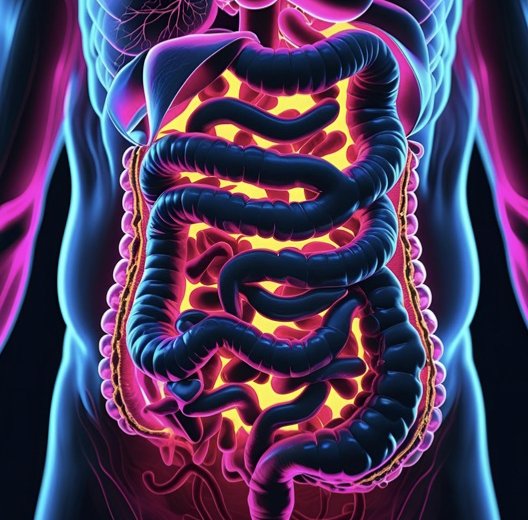
Have you ever wondered what happens to your food after you swallow it? The digestive system is like a highly coordinated food factory. It works to break down everything you eat into the nutrients your body needs.
Mouth
The food starts its journey from the mouth or the oral cavity. There are many other organs that contribute to the digestion process, including teeth, salivary glands, and tongue. Teeth are designed for grinding food particles into small pieces and are moistened with saliva before the tongue pushes the food into the pharynx.
Oesophagus
This is a muscular tube that connects the pharynx, which is a part of an upper section of the gastrointestinal tract. It supplies swallowed food along with its length. The epiglottis is found here, which is a small flip that folds over your windpipe as you sallow to prevent you from choking. There is also a low esophageal sphincter which has to relax to let the food in. The sphincter contracts and prevents the contents of the stomach from flowing back into the esophagus (acid reflux/heartburn).
Stomach
It serves as a muscular bag which is situated towards the left side of the abdominal cavity, beneath the diaphragm. This vital organ acts as a storage for the food and provides enough time to digest meals. The stomach also produces digestive enzymes and hydrochloric acid that maintains the process of digestion.
- Mixed with stomach enzymes, these enzymes continue the process of breaking down food into a usable form.
- Cells in the lining of your stomach secrete a strong acid and powerful enzymes that are responsible for the breakdown process.
- When the contents of the stomach are processed enough, they are released into the small intestine.
Small Intestine
The small intestine is a thin, long tube of about 10 feet long and a part of the lower gastrointestinal tract. It is present just behind the stomach and acquires a maximum area of the abdominal cavity. The complete small intestine is coiled and the inner surface consists of folds and ridges.
- Breaks down food using enzymes released by the pancreas and bile from the liver. Contents of the small intestine start out semi-solid and end in a liquid form after passing through the organ.
- Water, bile, enzymes and mucus contribute to the change in consistency.
Large Intestine
This is a thick, long tube measuring around 5 feet in length. It is present just beneath the stomach and wraps over the superior and lateral edges of the small intestine. It absorbs water and consists of bacteria that support the breakdown of wastes to fetch small nutrients.
- The stool is mostly food debris and bacteria. These “good” bacteria perform several useful functions, such as synthesizing various vitamins, processing water products and food particles and protecting against harmful bacteria.
Rectum
Waste products are passed into the end of the large intestine called the rectum and eliminated out of the body as a solid matter called stool. It is stored in the rectum as semi-solid feces which later exits from the body through the anal canal through the process of defecation.
Accessory Organs
Pancreas
It is a large gland present just behind the stomach. It is short with its anterior connected to the duodenum and posterior pointing towards the left part of the abdominal cavity. The pancreas releases digestive enzymes to complete the process of chemical digestion.
Liver
The liver is a roughly triangular, reddish-brown accessory organ of the digestive system located to the right of the stomach. It produces bile, which helps in the digestion of fat in the small intestine. The bile is stored and recycled in the gallbladder. It is a small, pear-shaped organ which is located just next to the liver.
Gallbladder
The gallbladder stores biles. As fatty food enters the upper portion of your small intestine, the gallbladder squeezes bile into the small intestine through the bile ducts. The bile is released into the first section of the small intestine (duodenum), which helps your body to break down and absorb fat from food.
Enzymes
Digestion of food involves chemical reactions that break up large food molecules into their ‘building block’ components. There are a number of factors that affect the rate of these reactions.
- Amylase – Made in the mouth and pancreas, which break down complex carbohydrates.
- Lipase – Made in the pancreas, which breaks down fats.
- Protease – Made in the pancreas, which breaks down proteins.
- Pepsin – Pepsin is secreted by the stomach to break down proteins into peptides or smaller groups like amino acids. Those that get absorbed or broken down further.
- Trypsin – Trypsin forms when an enzyme secreted by the pancreas is activated by an enzyme in the small intestine. Also activates pancreatic enzymes to help break down peptides.
 LifeLine
Leave a comment