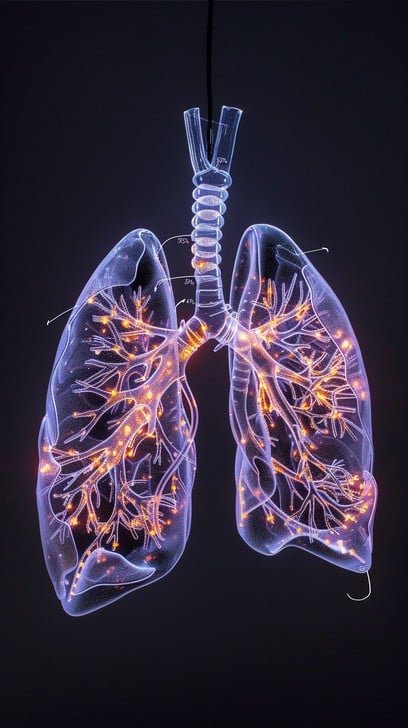
The respiratory system has many functions besides helping you inhale and exhale. It also helps in protecting your airways from harmful substances. The respiratory system is your body’s air delivery network. It removes waste gasses, including carbon dioxide, from the body when you exhale and delivers oxygen to the cells in your body when you inhale.
Anatomy
The respiratory system has many different parts that work together to help you breathe. Each group of parts has many separate components.
Your airways deliver air to your lungs. Your airways are a complicated system that includes your:
- Mouth and nose: Openings that pull air from outside your body into your respiratory system.
- Pharynx (throat): Tube that delivers air from your mouth and nose to the trachea (windpipe).
- Trachea: Passage connecting your throat and lungs.
- Bronchial tubes: Tubes at the bottom of your windpipe that connect into each lung.
- Lungs: Two organs that remove oxygen from the air and pass it into your blood.
From your lungs, your bloodstream delivers oxygen to all your organs and other tissues.
Muscles and bones help move the air you inhale into and out of your lungs. Some of the bones and muscles in the respiratory system include your:
- Diaphragm: Muscle that helps your lungs pull in air and push it out.
- Ribs: Bones that surround and protect your lungs and heart.
When you breathe out, your blood carries carbon dioxide and other waste out of the body. Other components that work with the lungs and blood vessels include:
- Alveoli: Tiny air sacs in the lungs where the exchange of oxygen and carbon dioxide takes place.
- Bronchioles: Small branches of the bronchial tubes that lead to the alveoli.
- Capillaries: Blood vessels in the alveoli walls that move oxygen and carbon dioxide.
- Lung lobes: Sections of the lungs — three lobes in the right lung and two in the left lung.
- Pleura: Thin sacs that surround each lung lobe and separate your lungs from the chest wall.
Inhalation
When you breathe in, your diaphragm contracts and moves downward, creating space in your lungs. Air enters through your nose or mouth, travels down the trachea, and passes into the bronchi, which branch into smaller bronchioles inside the lungs.
Gas Exchange
At the ends of the bronchioles are tiny air sacs called alveoli, surrounded by capillaries. Oxygen passes from the alveoli into your blood, while carbon dioxide moves from your blood into the alveoli to be exhaled.
Exhalation
Your diaphragm relaxes, air pressure in your lungs rises, and carbon dioxide is pushed out through your airways.
 LifeLine
Leave a comment