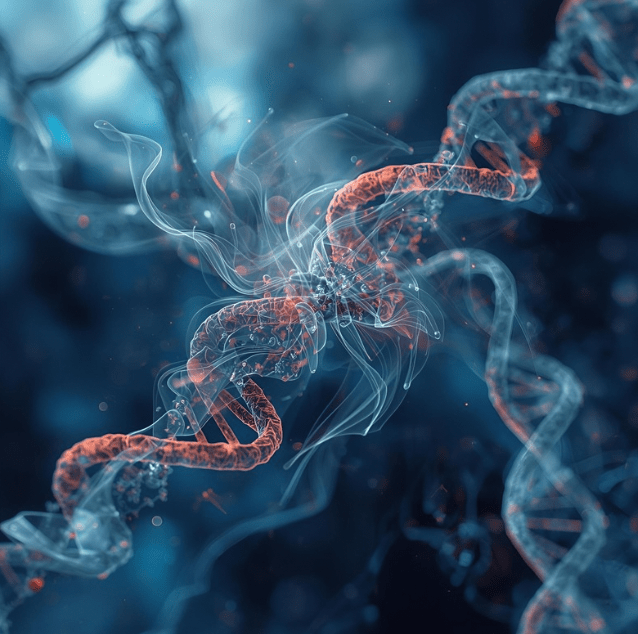
Genetic disorder is a disease caused by a change or mutation in an individual’s DNA sequence. Such mutation or change can be due to error in DNA replication or due to environmental factors such as smoking and exposure to radiation, which cause changes in DNA sequence.
Genes are the building blocks of heredity. They are passed from parent to child. They hold DNA, the instructions for making proteins. Proteins do most of the work in cells. They move molecules from one place to another, build structures, break down toxins, and do many other maintenance jobs.
Sometimes there is a mutation, a change in a gene or genes. The mutation changes the gene’s instructions for making a protein, so the protein does not work properly or is missing entirely. This can cause a medical condition called a genetic disorder.
You can inherit a gene mutation from one or both parents. A mutation can also happen during your lifetime.
- If there are harmful mutations it can possibly change the shape of a particular cell or secrete an enzyme or block an enzyme. That can lead to an abrasion or lead to a genetic disorder.
- Genetic disorder is a kind of disease/category/problem where you can clearly see that there is a mutation that is going to affect.
- Any change that occurs in any of our biological parents or both, may be inherited, which increases the risk/rate of us having a genetic disorder.
- So people generally have a missing chromosome or duplicated chromosome material. This means that some organisms might have 45 or 47 chromosomes instead of 46.
Carriers
In genetics, the term “carriers” refers to individuals who possess a copy of a genetic mutation or variant associated with a particular trait or disease but do not show the trait or symptoms of the disease themselves. Carriers are typically heterozygous for the gene in question, meaning they have one normal (wild-type) allele and one mutated allele. The presence of one normal allele often prevents the expression of the trait or disease, which typically requires two copies of the mutated allele (homozygosity).
Carriers are important in the context of genetic disorders that follow a recessive inheritance pattern. In a recessive genetic disorder, individuals who inherit two copies of the mutated allele (one from each parent) will typically manifest the disease or trait. Carriers, on the other hand, can transmit the mutated allele to their offspring without showing any symptoms themselves.
A carrier is a person who carries and is capable of passing on a disease-causing genetic mutation and may or may not exhibit disease symptoms. Carriers are linked to diseases that are inherited as recessive traits.
Nondisjunction
Nondisjunction is a genetic phenomenon that occurs during cell division, specifically in meiosis, where chromosomes fail to separate properly. This can result in an abnormal distribution of chromosomes in the daughter cells, leading to genetic disorders and variations.
Types of Nondisjunction
- Monosomy: In monosomy, one of the daughter cells lacks a chromosome, leading to a total chromosome count of 45 instead of the usual 46. Monosomy rarely results in viable offspring in humans; however, conditions like Turner syndrome result from monosomy of the X chromosome.
- Trisomy: In trisomy, one of the daughter cells receives an extra chromosome, resulting in a total chromosome count of 47 instead of 46. Trisomy is more common and some well-known conditions arising from it include Down syndrome (trisomy 21), Edwards syndrome (trisomy 18), and Patau syndrome (trisomy 13).
Types Of Genetic Disorders
- Single-gene disorders, where a mutation affects one gene. Sickle cell anemia is an example.
- A single gene defect is where there is a problem in a single gene, whether it may be blood group, skin color, hair color, etc.
- Chromosomal disorders, where chromosomes (or parts of chromosomes) are missing or changed. Chromosomes are the structures that hold our genes. Down syndrome is a chromosomal disorder.
- Chromosomal disorder is when the entire chromosome is defected. But if there is a problem with an entire chromosome then all the genes that are present in that chromosome will lead to that genetic disorder.
- Multifactorial genetic inheritance is also known as polygenic inheritance. They are caused as a result of environmental factors and gene mutations.
Chromosomal Disorder
Chromosomal disorders, also known as chromosomal abnormalities or genetic disorders, are conditions caused by changes in the structure or number of chromosomes in an individual’s cells. Chromosomes are the structures that carry genetic information in the form of DNA, and any alterations to their structure or number can result in various health problems.
Types of Chromosomal Disorders:
- Numerical Disorders:
- Trisomy: In trisomy, there is an extra copy of a chromosome. The most well-known example is Down syndrome (Trisomy 21), where an individual has three copies of chromosome 21 instead of the usual two.
- Monosomy: Monosomy occurs when an individual lacks one copy of a particular chromosome. Turner syndrome (Monosomy X) is an example where a female has only one X chromosome instead of the normal two.
Explanation and Process:
Chromosomal disorders usually arise due to errors in cell division, particularly during meiosis (gamete formation) or mitosis (cell division for growth and repair). Here’s how some of these disorders occur:
- Nondisjunction: This is a common cause of numerical disorders. It occurs when chromosomes fail to separate properly during meiosis. If homologous chromosomes (in meiosis I) or sister chromatids (in meiosis II) don’t segregate correctly, it can lead to gametes with an incorrect number of chromosomes. When fertilization occurs, the resulting zygote will have an abnormal chromosome number.
- Structural Changes: Structural disorders can arise from mistakes during chromosome replication, repair, or recombination. Deletions, duplications, inversions, and translocations can occur spontaneously or due to environmental factors like radiation or chemicals.
Hemophilia
Hemophilia, a genetic bleeding disorder, is primarily attributed to specific gene mutations located on the X chromosome. The genetic reasoning for hemophilia involves the inheritance pattern and the role of sex chromosomes in determining the disorder’s occurrence.
Humans have 23 pairs of chromosomes, including one pair of sex chromosomes (X and Y). Females typically have two X chromosomes (XX), while males have one X and one Y chromosome (XY).
Hemophilia is an X-linked recessive disorder. The responsible genes for producing clotting factors (Factor VIII for hemophilia A and Factor IX for hemophilia B) are located on the X chromosome.
Hemophilia is caused by mutations in genes responsible for producing clotting factors, essential proteins that aid in blood coagulation. There are two main types of hemophilia:
- Hemophilia A (Factor VIII Deficiency – This type is caused by a deficiency of clotting factor VIII, a protein necessary for blood clotting.
- Hemophilia B (Factor IX Deficiency – Hemophilia B is due to a deficiency of clotting factor IX, which also plays a vital role in blood coagulation.
Symptoms and Effects
- Individuals with hemophilia experience a range of symptoms and complications.
- Prolonged Bleeding – Even minor injuries can lead to prolonged bleeding episodes, as the absence or deficiency of clotting factors impairs the formation of stable blood clots.
- Spontaneous Bleeding – Spontaneous bleeding into joints, muscles, and other tissues can occur without apparent injury, leading to pain, swelling, and joint damage.
- Internal Bleeding – Internal bleeding can be life-threatening if it occurs in critical areas like the brain.
Inheritance and Gender
Hemophilia follows an X-linked recessive inheritance pattern:
Carrier Mothers
Carrier females usually have one normal X chromosome and one mutated X chromosome. They often do not show severe symptoms due to the presence of a functional gene on their other X chromosome.
Affected Males
Males have only one X chromosome, so a single mutated gene leads to hemophilia. They inherit the mutated gene from their carrier mother.
Treatment
- Treatment for Hemophilia often involves replacing the missing or defective clotting factors through infusions.
- Patients may receive preventive treatments or clotting factor infusions as needed to manage bleeding episodes.
- Gene therapy is an emerging treatment approach for Hemophilia, aiming to provide a long-term cure.
Genetic disorders remind us that even the smallest change in DNA or formation of gametes can have a massive impact on life. But with advancements in genetics, we move closer to unlocking cures and improving these mutations in biology.
 LifeLine
Leave a comment