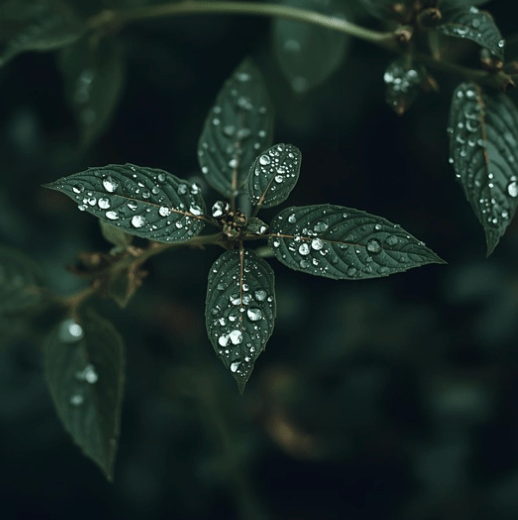
Transpiration is defined as the loss of water vapor from plant leaves by evaporation of water at the surfaces of the mesophyll cells followed by diffusion of water vapor through the stomata.
- When plants exchange carbon dioxide and oxygen with the atmosphere through cellular structures called “stomata” located on the surfaces of the leaves.
Steps of transpiration
- Water is passively transported into the roots and then into the xylem
- The forces of cohesion and adhesion (capillary action) cause the water molecules to form a column in the xylem & move upward (Ascent of sap).
- Cohesion: Water is attracted to water,
- Adhesion: Water is attracted to other substances.
- Water moves from the xylem into the mesophyll cells, evaporates from their surfaces and leaves the plant through the stomata.
Xylem & Phloem
| Xylem | Phloem |
| Mature xylem consists of elongated dead cells, arranged end to end to form continuous vessels (tubes). Mature xylem vessels containContain no cytoplasm Are impermeable to waterHave tough walls containing a woody material called ligninUnidirectionalXylem has small fibersLocated in the center of the vascular bundleThe primary function of xylem is to transport water and minerals from the roots to the leaves or other parts of the plant. | Phloem consists of living cells arranged end to end. Unlike xylem, phloem vessels contain cytoplasm, and this goes through holes from one cell to the next. BidirectionalPhloem has large fibersThe direction changes because of some seasons can cause organic material to mobilize towards the sources (leafs & bubs). Phloem transports sucrose and amino acids up and down the plant. This is called translocation. In general, this happens between where these substances are made (the sources) and where they are used or stored (the sinks). This means, for example, that sucrose is transported:From sources in the root to sinks in the leaves in spring timeFrom sources in the leaves to sinks in the root in the summer |
Factors affecting rate of transpiration
- Light: The stomata open during the day and close in the dark. Presence of light is directly proportional to the rate of transpiration.
- Humidity: The rate of transpiration is inversely proportional to relative humidity. It is easier for water to evaporate into dryer air than into more moist/saturated air..
- Temperature: A high temperature lowers the relative humidity and opens the stomata even in darkness. As a result, the rate of transpiration increases..
- Air: If the air is still, the transpiration rate is low. This is because the water vapor accumulates around the transpiring organs and reduces the diffusion pressure deficit of the air. If the air is moving, the saturated air around the leaves is removed and the transpiration rate increases.
- Water availability: The transpiration rate is directly proportional to the absorption of water by the roots from the soil. A decrease in water absorption causes the closure of stomata and wilting, thereby reducing the rate of transpiration.
 LifeLine
Leave a comment